


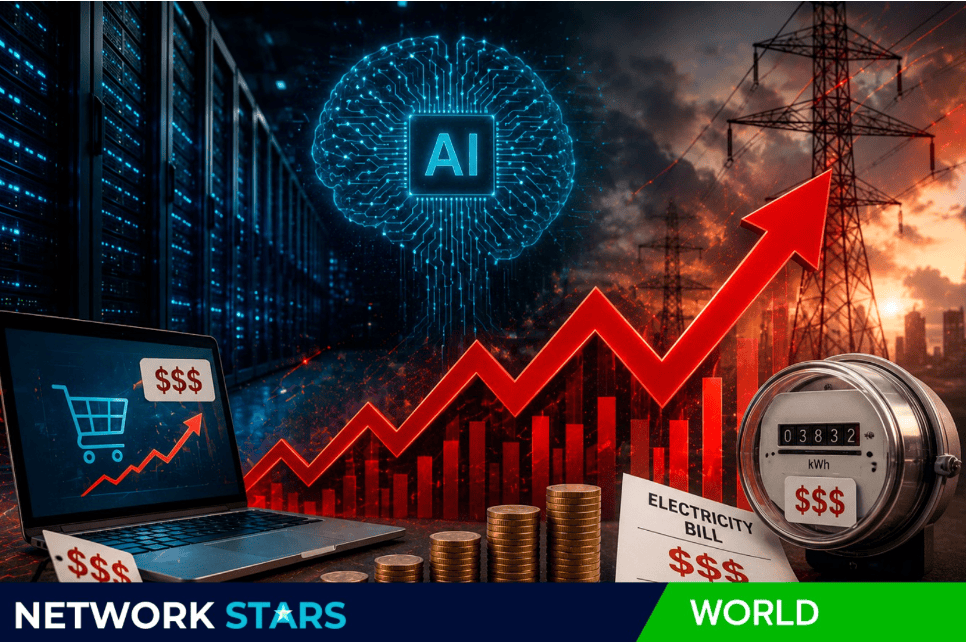
US consumers and the Federal Reserve are facing a new high-cost economic challenge. The surge in data center investments—projected to exceed $700 billion this year—to power artificial intelligence has driven up the prices of memory chips, computer processors, and other tech equipment, as well as electricity. Economists warn that the impact of AI on inflation will continue to push prices upward at least until the end of this year.
While this spike is not expected to be as severe as the one experienced between 2021 and 2023 (when inflation peaked at 9.1%), massive spending on tech infrastructure will keep prices rising faster than the Fed would prefer. This scenario could prompt the central bank to raise its benchmark interest rate later this year to cool down spending, which would increase borrowing costs for auto loans, mortgages, and business lines of credit.
Why Is Tech Infrastructure Spending Driving Prices Up?
Four of the world’s largest tech giants—Alphabet (Google’s parent company), Amazon, Meta Platforms, and Microsoft—are expected to invest approximately $720 billion this year, primarily dedicated to building AI data centers.
This massive expansion of servers requires a tremendous volume of semiconductors, the global supply of which has been severely constrained. According to estimates by JPMorgan Chase analysts, the cost of certain computer memory chips is projected to surge by up to 400% between 2024 and the end of this year. This imbalance is already translating into significantly higher retail prices for:
- Laptops and desktop computers.
- Smartphones.
- Video game consoles.
- Residential and commercial electricity rates.
Direct Consumer Increases: Apple and Microsoft Lead Price Hikes
The impact of AI on inflation is already visible in the product catalogs of major hardware brands. Apple recently announced a price increase of 15% to 25% on its laptops and tablets. For instance, a high-end MacBook now costs $1,999, up from its previous price of $1,699.
Similarly, Microsoft confirmed a $100 price hike for its Xbox video game console effective August 1, citing rising memory chip costs. Other major manufacturers such as Sony, Dell, and HP have taken similar measures across their respective product lines.
AI Electricity Demand: Another Long-Term Inflationary Driver
In addition to hardware components, AI data centers consume unprecedented amounts of energy. This massive electrical demand has forced utility companies across the United States to expand their capacity through costly investments that are ultimately passed down to utility bills.
According to the government’s consumer price index, electricity prices rose 5.9% year-over-year in May, outpacing overall inflation, which stood at 4.2%. Experts estimate that while chip prices may peak and stabilize later this year, utility costs will continue to feel the pressure of AI-related demand through 2028 and potentially beyond.
The Federal Reserve Keeps a Close Eye on Price Trends
Policymakers at the Federal Reserve are monitoring these market dynamics closely. Kevin Warsh, who took over as Fed chief on May 22, noted that while AI will eventually boost economic efficiency, its current phase of heavy investment is creating a strong demand shock relative to available supply.
Furthermore, John Williams, president of the New York Federal Reserve, warned that if this unsustainable demand translates into persistent price increases, the central bank will not hesitate to raise interest rates to protect its price stability mandate.
Source: Yahoo Noticias
