


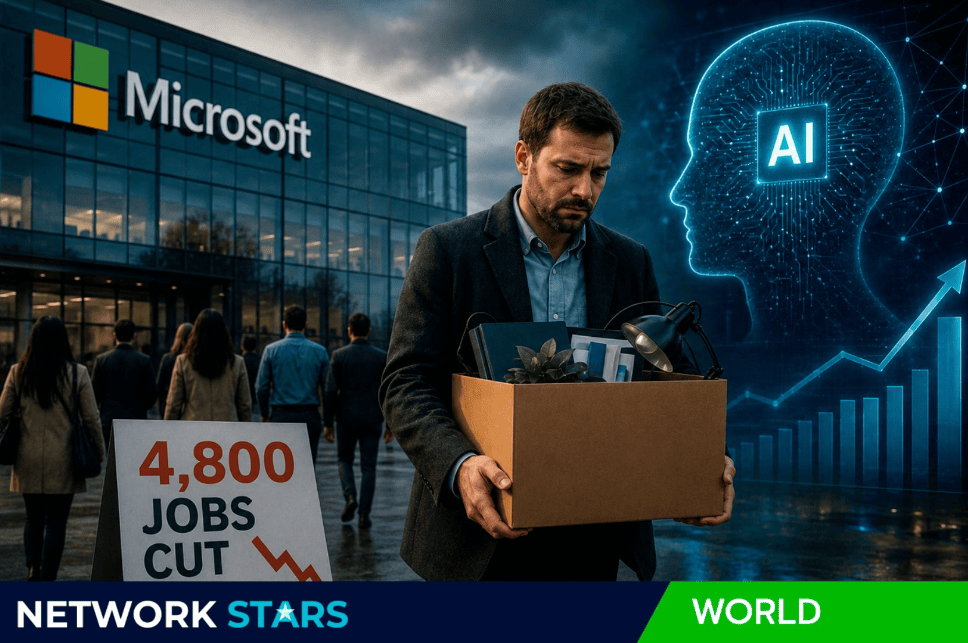
The Redmond-based tech giant has announced a drastic measure to align its internal structure with modern technological shifts. The new Microsoft layoffs will impact a total of 4,800 workers globally, a figure that represents approximately 2.1% of its entire worldwide workforce. This corporate restructuring aims to adapt the corporation’s operations to the massive growth of artificial intelligence (AI).
Xbox Heavily Impacted by the Microsoft Layoffs
According to official reports, the gaming sector will take the hardest hit within the multinational company. The Xbox division will experience a 20% reduction in its total workforce.
Asha Sharma, CEO of the gaming brand, communicated internally that around 1,600 layoffs will be executed immediately. The remaining 1,600 cuts in this department will take place progressively over the coming months, extending through the end of the 2027 fiscal year. Sharma openly admitted that navigating a restructuring process planned over a full year will introduce significant organizational challenges.
A Strategic Shift Accelerated by Artificial Intelligence
Amy Coleman, Chief Human Resources Officer of the tech giant, explained that this painful decision stems from the pressing need to realign resources, investments, and commercial efforts with a hyper-dynamic technological ecosystem. Coleman acknowledged that methodological shifts in hardware and software development are moving at a velocity never seen before.
This wave of Microsoft layoffs builds upon the austerity measures applied last year, a period in which the company had already eliminated roughly 9,000 jobs.
Wall Street Reaction and Corporate Financial Performance
The response from financial markets was immediate. Following the opening of the trading session in New York, the tech giant’s shares dropped 1.51%. In fact, the firm stands as the worst-performing stock among big tech companies so far in 2026, accumulating a decline close to 19%.
Many investors have begun questioning the actual return on investment derived from generative AI within the core business models. Although cloud computing segments and the LinkedIn platform maintain solid growth, other key divisions, such as the Windows operating system, Surface hardware devices, and Xbox itself, continue to show persistent weakness in their quarterly revenue streams.
