


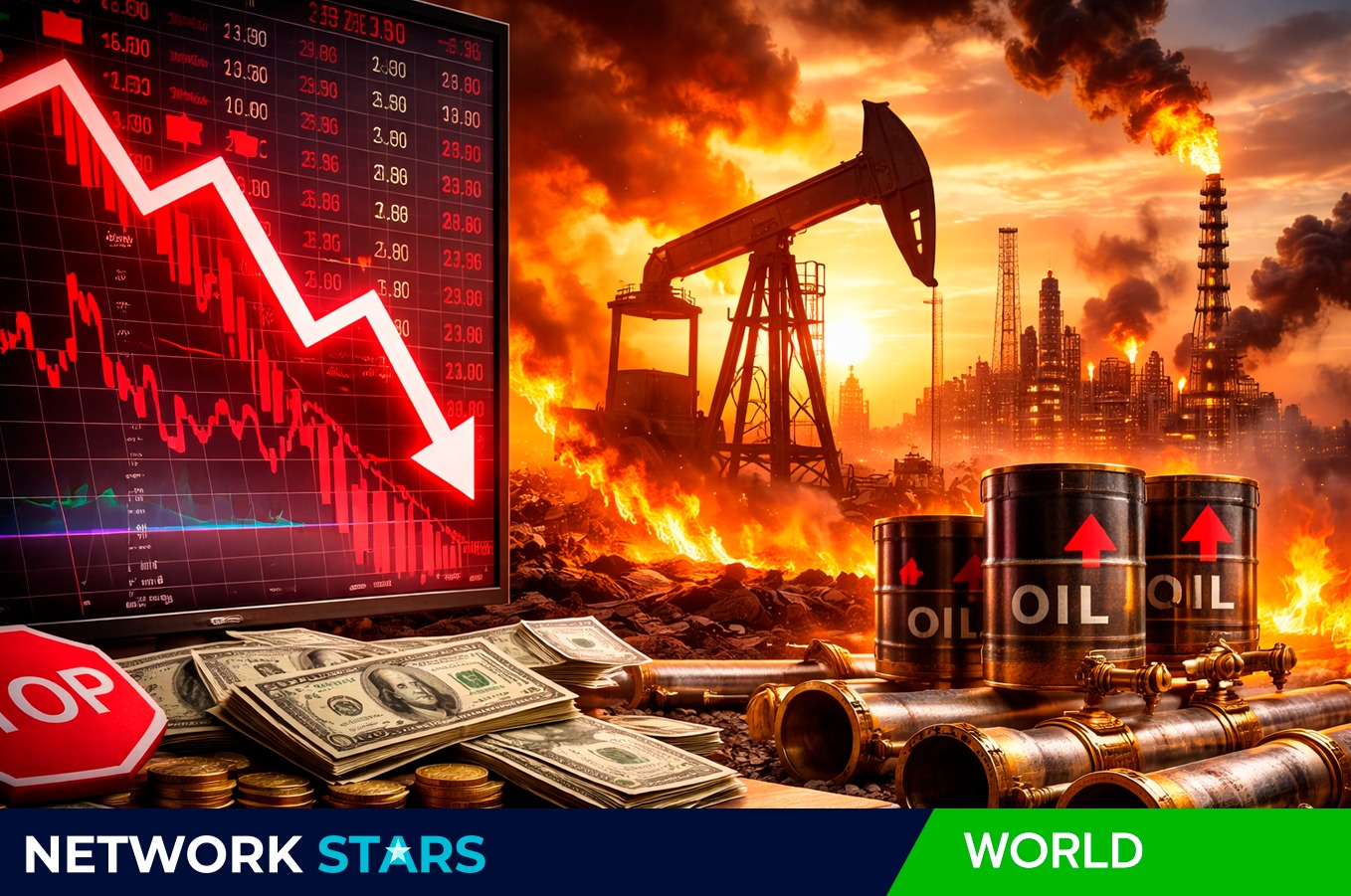
Financial instability has defined this Monday’s trading session. Oil and gas prices Middle East conflict have become the center of attention following attacks by the United States and Israel against Iran, triggering an immediate spike in raw materials and a widespread decline in stock markets.
Escalation in the Energy Market
The energy sector best reflects the crisis regarding oil and gas prices Middle East conflict. Brent crude surpassed $78, while WTI stood above $71. Tension in the Strait of Hormuz, through which 20% of the world’s crude oil passes, keeps analysts on edge.
- Natural Gas: Prices in Europe surged by more than 20%.
- Gold and Dollar: Both assets rose by 1% as safe havens.
Stock Market and Tourism Sector Collapse
While oil and gas prices Middle East conflict continue to rise, airline stocks are falling drastically. IAG and Air France-KLM led the losses in Europe due to increased operating costs and the cancellation of strategic routes.
OPEC+ Reaction and Inflation Risks
In an attempt to contain oil and gas prices Middle East conflict, Saudi Arabia and Russia have announced a production increase of 206,000 barrels per day. However, economists warn that if the crisis persists, the risk of stubborn inflation and a possible global recession is imminent.
Source: The Economist
